


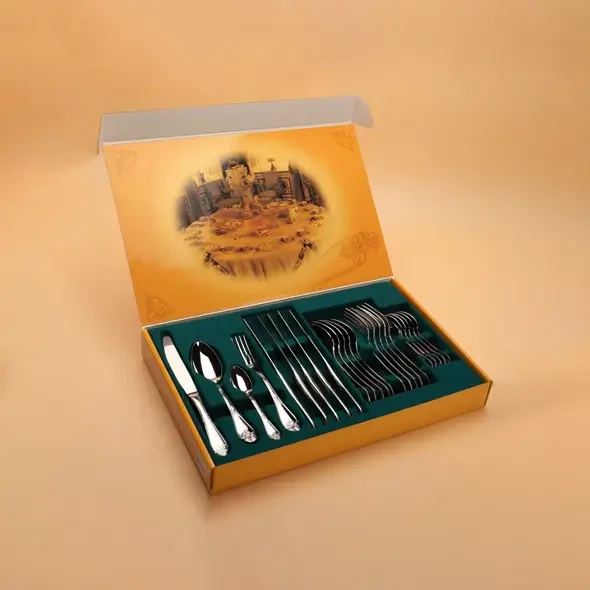
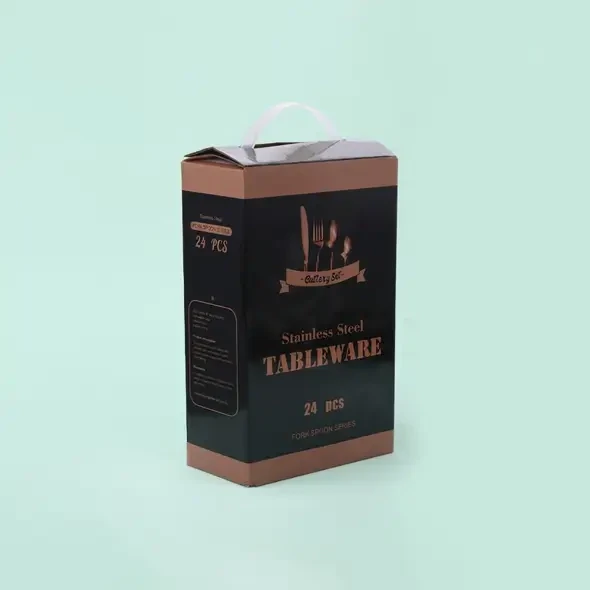
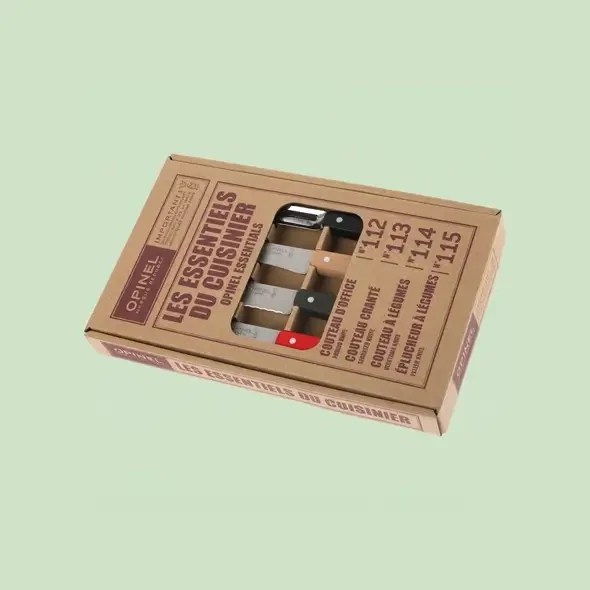
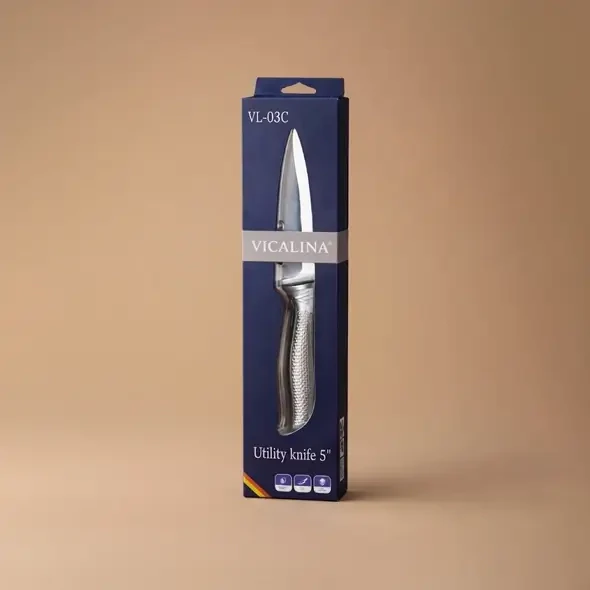
| Box Style | As Mention Above |
|---|---|
| Dimension (L + W + H) | All Custom Sizes & Shapes |
| Minimum Run ( For Boxes and Mylar Bags) | 100 Boxes - 1000 Mylar Bags ( 500 each design) |
| Paper Stock | 10pt to 28pt (60lb to 400lb) Eco-Friendly Kraft, E-flute Corrugated, Bux Board, Cardstock |
| Printing | No Printing, CMYK, CMYK + 1 PMS color, CMYK + 2 PMS colors |
| Finishing | Gloss Lamination, Matte Lamination, Gloss AQ, Gloss UV, Matte UV, Spot UV, Embossing, Foiling |
| Included Options | Die Cutting, Gluing, Scored,Perforation |
| Additional Options | Eco-Friendly, Recycled Boxes, Biodegradable |
| Proof | Flat View, 3D Mock-up, Physical Sampling (On request) |
| Turnaround | 7 - 8 Business Days |
| Shipping | FLAT Position |
Breakage is the only metric that matters
Every other product category forgives a mediocre box. Crockery does not.
A 3% breakage rate on a $60 dinner set is not a 3% problem. You lose the product, the outbound freight, the return freight where applicable, the replacement production, the staff time handling the complaint, and frequently the customer. On a thousand-unit run that is thousands of dollars, and it recurs on every shipment until the packaging changes.
Spending 40 cents more per box to take breakage from 3% to under 1% pays for itself many times over. That calculation is the entire argument for specifying crockery packaging properly rather than buying the cheapest box that fits.
Almost all crockery damage traces back to four things: wrong orientation, insufficient clearance, missing partitions, and under-specified board. Each is fixable at the design stage and expensive to fix afterwards.
Plates ship on edge, not flat
This is the single highest-impact change most crockery sellers can make, and it is counterintuitive enough that many never make it.
A stack of plates lying flat presents its weakest axis to the most common impact. Drop a parcel on its base which is how parcels land and the force travels straight through the flat faces. The plates flex, and ceramic does not flex.
Stand the same plates on edge, separated, and the impact travels through the rim, which is the strongest part of the piece. The same drop that shatters a flat stack routinely leaves an edge-packed set intact.
The practical consequence for your packaging: a plate box wants to be tall and narrow rather than wide and shallow, with vertical divider slots holding each piece upright and separated. This changes the die, so it has to be decided before tooling, not after the first damage report.
Bowls and cups follow different rules. Bowls nest, but never nest them directly against each other the contact point concentrates force. Separate each with a layer. Cups and mugs with handles need individual cells, because the handle is the first thing to snap and it will catch on anything adjacent.
Two inches of cushioning, on every side
The working standard for fragile shipping is a minimum of two inches of cushioning between the product and the outer wall of the box, on all six sides.
Two inches sounds generous until you consider what it is for. The cushioning is not there to stop the box being crushed. It is there to slow the product down during the milliseconds of an impact, so the deceleration force stays below what the ceramic can take. Less material means a faster stop and a higher peak force.
The most common failure we see is a box sized tightly to the product with a thin layer of void fill added afterwards. That box is the right size for storage and the wrong size for shipping. Size the box to the product plus the cushioning, not to the product.
It also means the product must not touch the box wall at any point. One corner of one plate resting against the corrugated is a direct path for impact energy, and it is where the crack will start.
Sizing your box
Measure each piece at its widest point, then add cushioning clearance on every side. The figures below are starting points for common dinnerware; send your own measurements, and we will build the die to them.
| Piece | Typical size | Box guidance |
|---|---|---|
| Dinner plate | 10–11" diameter | Vertical slots, 2" clearance base and top |
| Side plate | 7–8" diameter | Vertical slots share tooling with dinner plates |
| Cereal or soup bowl | 6–7" × 2.5" deep | Layered with board between, never nested bare |
| Mug or cup | 4" × 3.5" with handle | Individual grid cell, handle clear of adjacent walls |
| Wine glass | 3.5" × 8–9" tall | Deep cell supporting the stem along its length |
| Serving platter | 14–16" long | Die-cut tray, packed flat with full-face support |
| 12-piece dinner set | Combined slots, grid and tray; double wall minimum |
Two things people get wrong at this stage. They measure the plate and forget the foot ring, which sits proud and sets the real stacking pitch. And they size for the pieces without adding insert thickness, so the finished box will not close once the dividers are in.
Send piece dimensions and the count per box, and we will calculate the finished outer size including inserts and clearance.
Partitions, dividers and inserts
Crockery pieces damage each other more often than the box damages them. Two plates touching, with the whole parcel's momentum behind them, will chip.
Grid partitions. Interlocking chipboard or corrugated dividers forming cells. The standard for glassware, mugs and stemware, and the most cost-effective protection available. Cell count and cell size are built to your piece dimensions.
Vertical slot dividers. For plates and saucers on edge. Each piece sits in its own slot with a board between it and its neighbour.
Die-cut card inserts. Shaped trays holding irregular pieces of teapots, gravy boats, and serving platters in a fixed position.
Moulded pulp trays. Formed fibre cradles matching the product profile. Higher tooling cost, best protection per gram, fully recyclable, and the right answer for high-volume dinnerware lines.
Foam inserts. Best cushioning performance for heavy or irregular pieces. Poorer sustainability profile, so worth weighing against pulp for consumer-facing brands.
For a full dinner set, expect to combine these: slot dividers for plates, a grid for cups, and a die-cut tray for serving pieces.
Double boxing for anything high value
For fragile products above a certain value, the industry practice is double boxing: the product in an inner box with its own cushioning, then that inner box suspended inside an outer box with two to three inches of cushioning between the two.
The outer box takes the impact, the cushioning layer absorbs and dissipates it, and the inner box arrives having experienced a fraction of the original force.
It costs more in material and in dimensional weight. It is still the correct answer for bone china, hand-finished ceramics, wedding registry pieces and anything where a single breakage costs more than the packaging for an entire run.
For lower-value stoneware and everyday dinnerware, a single well-specified box with proper partitions is usually sufficient.
Board specification: what the numbers mean
This is where crockery packaging is won or lost, and where most buyers accept whatever they are handed.
Single wall, one fluted layer between two liners. Suitable for light single pieces: a mug, a small bowl, a saucer.
Double wall, two fluted layers. The default for dinner sets, multiple pieces, and anything with real weight.
Triple wall, three fluted layers. For heavy platters, large serving pieces and bulk trade shipments.
Two ratings describe corrugated strength, and they measure different things.
The Edge Crush Test (ECT) measures stacking strength by how much force the board takes on its edge before crushing. This is what matters when your boxes sit under other boxes on a pallet or in a truck. Common grades run 32 ECT for standard single wall and 44 ECT and above for double wall.
Mullen burst measures resistance to puncture and rupture. Common ratings are 200 lb for single wall and 275 lb for double wall.
For crockery, ECT usually matters more, because the dominant risk is a heavy parcel crushed from above rather than punctured.
Corrugated boxes carry a Box Maker's Certificate, a printed stamp on the bottom flap showing the board's rating. It is worth knowing it exists, because it is the only independent statement of what you actually received.
Tell us the total loaded weight and how the boxes will be stacked, and we will specify the board to that rather than to a default.
Weight, handling and hand holes
A twelve-piece dinner set with proper cushioning is a heavy parcel, and weight introduces its own problems.
Heavier parcels get handled more roughly, not less. They are dropped more often, dragged, and placed at the bottom of stacks. Carriers apply additional handling and over-maximum-limits surcharges above defined weight and size thresholds, which vary by carrier and change annually.
Hand holes make a heavy box easier to carry, and every hole removes structural strength from the panel it sits in. If you need them, they should be die-cut with reinforced surrounds and positioned away from load-bearing corners. On very heavy sets, splitting into two boxes often beats one box with handles.
There is also a practical retail consideration: if a customer has to carry the box from a shop to a car, it needs a grip. If it goes courier-to-door, it does not, and you are better off keeping the panel intact.
Matching the box to the material
Not all crockery is equally fragile, and speculating as though it is wastes money at one end and causes breakage at the other.
Bone china. The thinnest, lightest and most fragile. Individual wrapping, individual cells, and double boxing for anything of value.
Porcelain. Dense and hard, less forgiving of impact than it looks. Chips at rims and handles. Full partitioning required.
Stoneware. Heavy and comparatively robust. The weight itself becomes the packaging problem; board strength and stacking matter more than cushioning depth.
Earthenware. Softer, more porous, more prone to chipping at edges. Rim protection is the priority.
Glass and crystal. Grid cells are essential. Stemware needs cells deep enough to support the stem along its length rather than only at the base.
Melamine and plastic. Barely fragile. Package for presentation, not protection, and do not pay for cushioning it does not need.
Mixed sets need specifying to the most fragile piece in the box, not the average.
Three different jobs, three different boxes
Retail shelf. The box sells the product and often has to show it. A die-cut window on a printed carton, with internal partitions doing the protection. The customer carries it home, so a single shop-to-car journey is the transit requirement, not a courier network.
E-commerce direct to consumer. The hardest case. The box has to survive an automated sorting network, then open into something worth photographing. This is where double boxing, proper clearance and orientation matter most, and where a plain outer with a branded inner often outperforms an expensive printed outer that arrives scuffed.
Wholesale and trade. Bulk cartons to restaurants, hotels and retailers. Presentation matters little, but board strength and stacking matter enormously. Triple wall and clear labelling.
Gift and registry. Rigid boxes, magnetic closures, lined trays. Here the box is part of the purchase and is often kept. Protection still has to be engineered underneath the presentation, which is where gift crockery packaging most often fails.
Test before you commit to a run
Crockery is the category where a physical test is not optional.
Ask for a sample box, pack it with your actual product, and drop it. Not gently. A parcel in a courier network experiences drops from waist height onto hard floors, corner impacts, and compression under other freight. Your test should approximate that.
Formal transit testing standards exist for exactly this purpose and are used across the industry to simulate parcel handling before a product ships at volume. If you are launching a dinnerware line at any real volume, testing to a recognised standard is worth the cost.
At minimum: pack a sample, drop it flat on its base, on a corner, and on an edge, from around a metre. Open it. If anything is chipped, the specification is wrong, and you have just saved yourself a thousand replacement units.
We supply physical samples on request for bulk orders. Use them for this rather than only for checking print colour.
Five mistakes that cost a production run
Sizing the box to the product. The box has to fit the product plus its cushioning plus its inserts. Sizing to the product alone guarantees you have to add void fill later, which is the least effective form of protection.
Packing plates flat. Covered above, and it remains the most common single cause of ceramic breakage in transit.
Trusting a fragile label. Handling markings signals intent; they do not change how an automated sorting network moves a parcel. Design as though nobody reads the box, because in a high-volume network nobody does.
Under-specifying the board to save on unit cost. A single wall box on a twelve-piece set saves cents per unit and costs whole products. This is the false economy that keeps crockery brands in a replacement cycle.
Approving from a 3D render. A digital proof shows colour and layout. It cannot tell you whether the insert holds the pieces or whether the box survives a corner drop. For this category, that gap matters more than for any other.
Labelling and handling
Mark orientation clearly if the pack has a correct way up, and keep the marking on the panel so a handler will actually see when the box is on a belt.
Weight declarations matter for warehouse handling and for carrier compliance. Where a box is heavy enough to need two people, saying so on the outside is worth doing.
None of this substitutes for engineering. Treat handling markings as the last line of defence rather than part of the protection strategy.
Printing and finishing
Crockery packaging usually carries a large surface area, which gives artwork room to work.
Matte lamination suits ceramic and artisan positioning and hides the handling marks that heavy boxes inevitably collect. Specify anti-scuff film if your artwork uses dark colours, because these boxes get dragged.
Gloss deepens colour and suits bright, patterned dinnerware where the artwork is doing the selling.
Soft touch for bone china, wedding and premium gift lines, where the box is part of the perceived value.
Spot UV over matte on the logo gives contrast for one extra pass and is the best value finish available.
Foil and embossing for registry and luxury sets.
One caution specific to this category: on double- and triple-wall corrugated, fine print detail does not hold as well as it does on flat cardboard, because the fluting telegraphs through. For detailed artwork on a corrugated outer, litho-laminated printed liner is the route, not direct printing.
What drives your price?
Four things, roughly in order: board specification, insert complexity, box size, and quantity.
Inserts are usually the largest variable and the easiest place to overspend. A moulded pulp tray for a twelve-piece set costs considerably more than a chipboard grid that protects nearly as well. Ask us to price both.
Two savings specific to crockery ranges. Standardise cell dimensions across your line so one insert tooling serves several products. And separate the protective box from the presentation layer; a plain, well-engineered inner with a printed sleeve or belly band often costs less than a fully printed heavy-board outer, and photographs better on arrival.
Dimensional weight is a real cost here. Cushioning adds volume, and carriers bill on volume when it exceeds actual weight. Two inches of clearance is worth paying for; six inches is paying to ship air.
Storage, humidity and long shelf life
Crockery itself is inert, but the box around it is not, and packaging that sits in a warehouse for a season behaves differently from packaging that ships the week it is made.
Corrugated loses compression strength as it absorbs moisture from the air. In a humid warehouse a stack that was stable in month one can bow by month four, and a bowed stack transfers load unevenly onto the boxes underneath. If your stock holds for a season before it sells, specify board strength for the storage condition rather than for the day it ships.
Pallet stacking height matters for the same reason. The box at the bottom carries everything above it for the whole storage period, not just for the truck journey. Tell us your pallet configuration and we will factor it into the ECT specification.
Metallic decoration is worth a separate note. Gold and platinum-banded china can react to acidic board over long storage, and tissue interleaving between pieces protects both the decoration and the glaze. For anything decorated, specify a neutral-pH tissue rather than a coloured one, since dyes can transfer under pressure and warmth.
Sustainability
Corrugated is among the most widely recycled packaging materials, and for most crockery applications it is both the best-performing and the most recyclable option.
The weak points are the inserts. Moulded pulp is recyclable and compostable and performs well. Chipboard dividers recycle with the box. Expanded foam does not, and it is increasingly a customer complaint on premium goods where the buyer notices.
If sustainability is part of your positioning, specify pulp or board inserts and skip lamination on the outer. An uncoated printed corrugated box with a debossed or single-colour mark recycles cleanly, costs less, and suits artisan ceramics better than a laminated one.
We supply FSC-certified and recycled-content board across the range. Ask at quote stage so the material is priced in from the start.
Ordering custom crockery boxes
Corrugated shippers, retail cartons, rigid gift boxes, sleeves and mailers, with grid partitions, slot dividers, die-cut card inserts, moulded pulp trays and foam. Single, double and triple wall. Matte, gloss, soft touch and spot UV finishing, and window options for retail.
Minimum order 50 boxes. Free design support, free 3D proofs, no die or plate charges, free shipping across Canada, and a quote within 24 hours.
Share your piece dimensions and the number of pieces per box, the total loaded weight, the material your crockery is made from, and whether the boxes ship by courier, go to retail shelves, or move as trade pallets. We will specify board strength to the load, recommend the insert type that protects your pieces without overspending, and send a sample you can pack and drop before you commit to a run.


