


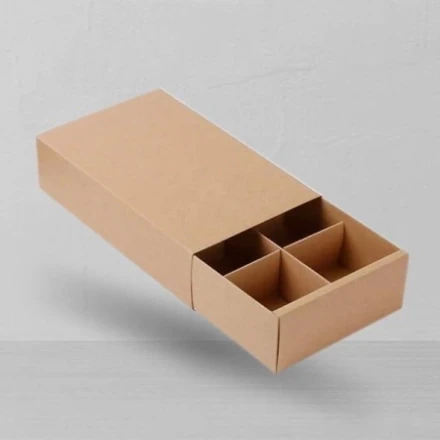
| Box Style | As Mention Above |
|---|---|
| Dimension (L + W + H) | All Custom Sizes & Shapes |
| Minimum Run ( For Boxes and Mylar Bags) | 100 Boxes - 1000 Mylar Bags ( 500 each design) |
| Paper Stock | 10pt to 28pt (60lb to 400lb) Eco-Friendly Kraft, E-flute Corrugated, Bux Board, Cardstock |
| Printing | No Printing, CMYK, CMYK + 1 PMS color, CMYK + 2 PMS colors |
| Finishing | Gloss Lamination, Matte Lamination, Gloss AQ, Gloss UV, Matte UV, Spot UV, Embossing, Foiling |
| Included Options | Die Cutting, Gluing, Scored,Perforation |
| Additional Options | Eco-Friendly, Recycled Boxes, Biodegradable |
| Proof | Flat View, 3D Mock-up, Physical Sampling (On request) |
| Turnaround | 7 - 8 Business Days |
| Shipping | FLAT Position |
How Corrugated Board Is Built
Corrugated board is three components working together: a flat outer liner, a wavy fluted medium, and a flat inner liner glued to the other side of that wave. The waves are the entire point. Each arch behaves like a small structural column, transferring load along its curve rather than letting it press straight through the board, while the air gaps between the arches absorb impact and provide insulation.
This is why a sheet of corrugated weighing very little supports far more than a solid board of the same weight. It is also why a crushed corrugated box never fully recovers once the arches collapse, the structure that was doing the work is gone. Anyone who has received a parcel with a flattened corner has seen the mechanism fail.
Two vocabulary points that recur across every quote you will receive. Liner is the flat facing paper, and it determines the printing surface and puncture resistance. Medium is the fluted paper in the middle, and it determines cushioning and stacking strength. Change the liner and you change how the box looks and how well it resists being punched through. Change the medium and flute and you change how much it protects and how high it stacks.
Flute Profiles: The Most Consequential Choice You Make
Flute profile is the single decision that most affects both protection and print quality, and it is the one competitors skip entirely. Profiles are named by letter, and confusingly the letters reflect the order of invention rather than size, so they do not run in sequence.
E-flute measures roughly 1 to 1.5 mm thick with around 90 flutes per linear foot. The tight, dense corrugation resists crushing during printing, which produces a smooth surface that takes high-quality litho and digital printing almost as well as folding carton board. E-flute was developed specifically as a stronger alternative to plain paperboard, and it remains the standard for premium eCommerce mailers, cosmetic outers, tech accessories and retail-ready cartons. Its thin profile also means you store roughly twice as many flat boxes per pallet as you would in B-flute, which matters if you are holding inventory.
B-flute measures about 3 mm and is the versatile middle ground, working in both die cutting and conventional case making. It carries good all-round protection with decent print quality and typically runs in the 32 to 44 ECT range for general parcel shipping. If you are unsure and shipping ordinary consumer goods, B-flute is usually the safe answer.
C-flute measures about 3.5 to 4 mm and delivers greater compression and stacking strength than B-flute, which makes it the standard for palletized shipping cases. The trade-off is print quality the coarser flute shows through the liner more readily, producing the faint ribbing known as washboarding on large printed areas.
F-flute is the thinnest in common use at around 0.8 mm. It suits small rigid retail cartons and tuck-end boxes where you want corrugated strength in a folding carton form factor.
A-flute is the thickest single-wall profile and delivers maximum cushioning for fragile or lightweight bulky goods. Print quality is the weakest of the group.
Double-wall combinations bond two profiles together. BC at roughly 6 to 7 mm is the classic heavy-duty board, sometimes called twin cushion C-flute's stacking depth with B-flute's puncture resistance on the outer face, used for heavy shipments, appliances and pallet loads. EB at around 4 to 4.5 mm pairs E-flute's print surface with B-flute's protection, giving retail-ready boxes that survive transit. Be aware that EB is genuinely too thick for small mailers, uses considerably more material than single-wall, and carries a meaningfully higher cost and carbon footprint. It is the right answer sometimes and an expensive mistake often.
The short version most projects need: E-flute when the box will be seen and photographed, B-flute for general shipping, C-flute for stacking and palletizing, double-wall when weight or fragility genuinely demands it.
Single, Double and Triple Wall
Wall count multiplies the board's performance envelope independently of flute choice.
Single-wall one fluted medium between two liners covers the overwhelming majority of retail and parcel work. Most consumer goods ship perfectly well in single-wall C or B, and most premium direct-to-consumer mailers are single-wall E.
Double-wall two mediums and three liners adds thickness, puncture resistance and stacking strength without needing a heavier single flute. This is where BC and EB live. Specify it for heavy contents, tall stacked pallets, long transit routes or genuinely fragile goods.
Triple-wall three mediums and four liners is the strongest available construction, used for export crates, industrial components and applications that would otherwise need a wooden case.
The common error runs in one direction: over-specifying. Double-wall on a two-kilogram product is money spent on material and freight weight that the product never needed. We would rather size the board to the actual load than upsell the board.
How Corrugated Strength Is Actually Measured
Two standards appear on box certificates and in quotes, and they measure different things.
Edge Crush Test measures how much force the board withstands on its edge, which correlates directly to stacking strength. It is the modern standard and the more useful number for most buyers, because stacking is what fails in warehousing and palletized freight. A 32 ECT single-wall board is a common general-purpose specification.
Bursting test measures the pressure needed to rupture the board, which correlates to puncture and rough-handling resistance. It is the older standard, still used where contents are heavy and dense, and still referenced in some carrier requirements.
If your boxes will be stacked on pallets or in a warehouse, ECT is the number to specify. If they will be handled roughly, thrown into cages or shipped individually with dense contents, Mullen is the more relevant measure. Tell us the transit and storage conditions and we will specify against the failure mode that actually threatens your product.
Box Styles
Style codes describe how the board is cut and folded, and the right one depends on how the box is assembled, what it holds and whether a customer will ever see it.
Regular Slotted Container is the most widely used style in the world. Four flaps of equal length meet at the centre when closed, top and bottom. It is economical, machine-friendly and the default for general shipping. It is not a presentation box.
Mailer boxes, built on a roll-end tuck or similar die-cut construction, fold flat, assemble without tape, and open into a clean printed interior. This is the eCommerce and subscription standard, and it is where E-flute earns its cost.
Full Overlap has flaps that fully overlap the top and bottom panels, adding a second layer of board across the two most vulnerable faces. Use it for heavy or dense contents that would crush an RSC.
Die-cut boxes are cut to a custom shape rather than a standard slot pattern, which allows integrated locking tabs, handles, hanging features and unusual proportions.
Shipper and tray combinations pair an outer shipping case with an inner tray or insert, which is how fragile and multi-piece products travel safely.
Display and shelf-ready styles are engineered to be opened and placed directly on a retail shelf, cutting shelf-stocking labour for the retailer.
Printing on Corrugated: Why Flute Choice Comes First
Print method and flute profile are linked, and choosing artwork before choosing board is how brands end up disappointed.
Flexographic printing applies ink directly to the corrugated sheet. It is economical at volume and excellent for solid colours, logos and type, but it does not reproduce fine photographic detail well. It suits shipping cases and one to three-colour branded boxes.
Litho lamination prints your artwork on a separate paper sheet using offset lithography, then bonds that printed sheet to the corrugated board. This gives full photographic quality on a corrugated structure and is how premium retail corrugated packaging is produced. It costs more and adds a production step.
Digital printing goes straight to board with no plates, which makes it the economical route for short runs, variable designs and seasonal versions. Quality is strong, particularly on E-flute.
The relationship to remember: fine flutes print well, coarse flutes do not. Detailed artwork on C-flute or A-flute will show washboarding — faint ribbing across solid areas where the liner dips slightly between the arches. If your design depends on large flat colour or photography, specify E-flute or litho lamination from the start rather than discovering the ribbing on a delivered pallet.
White-Top and Kraft Liners
The outer liner determines what you are printing on. Standard kraft liner is brown, the most economical option, hides scuffing well and signals natural and unfussy. White-top liner is a bleached white ply over the kraft base, giving a bright printing surface on the outside while the interior stays brown the construction behind most white printed mailers. Fully bleached liner gives white inside and out at a higher cost, used where the interior is part of the presentation.
For most branded mailers, white-top is the sensible middle: a clean printed exterior, a natural interior, and no premium paid for a surface the customer sees for two seconds.
Our Corrugated Range
Corrugated runs through several parts of our catalogue, so the right starting point depends on what you are shipping or displaying.
Corrugated mailer boxes are the core of the range and the most requested corrugated product we make. Self-locking construction, no tape required, printed inside and out if you want it, usually built on E-flute for print quality and pallet efficiency. These are the boxes behind subscription programmes, direct-to-consumer launches and premium eCommerce fulfilment.
Mailer packaging more broadly covers the formats around the mailer box sleeves, wraps and shipping-focused constructions for brands that need protection and branding in the same unit.
Display packaging uses corrugated structurally, since counter displays, shelf-ready trays and floor units all depend on board strength to hold their shape under product weight. Our bath bomb display boxes are a working example of corrugated doing structural and retail work at once.
Food packaging relies on corrugated for anything that needs rigidity and grease resistance together French fry boxes, burger boxes, ice cream cone holders, bakery and takeaway formats. Food applications need the barrier specified explicitly, since plain kraft absorbs oil.
Apparel and electronics packaging uses corrugated for shoe boxes, shirt boxes and electronic boxes, where the product is heavy enough or valuable enough that folding carton board would not hold up in transit.
Bottle and pet food boxes use corrugated with inserts and dividers, because dense or breakable contents need the board to carry weight and the insert to stop movement.
If you are choosing between materials rather than within corrugated, our cardboard packaging pages cover folding carton stock for lighter retail cartons, and rigid packaging covers presentation boxes where structure matters more than shipping strength.
Industries
eCommerce and direct-to-consumer brands are the largest users, since every order ships and every box is a brand touchpoint. Food and beverage brands use corrugated for takeaway, bakery, meal kits and grocery outers. Cosmetics and skincare use E-flute mailers and litho-laminated retail outers. Electronics and accessories use it for retail cartons and protective shippers. Apparel and footwear use it for mailers, shoe boxes and returns-friendly constructions. Health, supplements and pet products use it for shipping cases with inserts. Retail and grocery suppliers use shelf-ready corrugated to cut stocking time in store.
Sizing, Dimensions and Flute Direction
Three practical points that prevent the most common ordering errors.
Dimensions are internal, not external. Corrugated box dimensions are quoted as length by width by depth, measured inside the box, because the inside is what has to fit your product. The board thickness is added on top. On double-wall this matters more than people expect a BC board adds close to 7 mm on every side, which is enough to change how a tightly fitted product sits.
Order is fixed. Length is the longer dimension of the opening, width the shorter, depth the distance from opening to base. Quoting them out of order produces a box with the right volume and the wrong shape.
Flute direction affects strength. The flutes should run vertically through the walls of a box that will be stacked, because that is the orientation in which the arches carry compression. Running them horizontally weakens stacking performance considerably. We set this correctly on the dieline, but it is worth knowing why a box that looks identical can perform very differently.
Leave a small clearance around the product rather than fitting exactly to its dimensions, and tell us the product weight along with the dimensions weight determines board grade, and dimensions alone do not.
Sustainability
Corrugated has a genuinely strong environmental position, and it does not need overstating to be persuasive.
Old corrugated containers are among the most successfully recovered packaging materials anywhere, with well-established collection streams across Canada. The board is typically manufactured with substantial recycled content already, and kraft fibres are long enough to survive multiple recycling cycles before they degrade. Plain corrugated with water-based flexo ink goes straight into the paper stream with no separation required.
What weakens the position: plastic film lamination, which complicates recycling; heavy wax coatings, which some facilities reject outright; and over-specification, which is the largest avoidable impact of all. A double-wall box holding a light product uses roughly twice the material and adds freight weight on every shipment for the life of the SKU.
FSC-certified board, recycled-content liners, soy and water-based inks, and aqueous coating in place of film are all available on request. But the biggest lever remains the one that also saves you money a box sized correctly to the product, on the lightest board that genuinely protects it.
Arriving at Your Specification
Work through it in this order and the quote takes one exchange rather than five.
Start with the product: dimensions, weight and fragility. Then decide the journey parcel courier, palletized freight, retail shelf, or all three because that determines whether you are optimizing for stacking, puncture resistance or presentation. That settles flute and wall count. Then decide whether the box is seen by a customer, which settles liner colour and print method. Then choose the style against how it will be assembled and by whom. Coating comes last, chosen against handling conditions rather than appearance.
If any of that is unclear, send us the product dimensions, its weight and a photograph. We will come back with a recommended board, flute, style and print method, and explain why rather than just quoting a number.
Working With Us
Every corrugated box is engineered to your product rather than fitted to a stock size. Minimums start at 50 units, so a launch run or a design test is practical. Die cutting, plate setup, custom shapes, scoring and dieline development are included in the quoted price. Design support is free, including structural dielines and print-ready artwork preparation. Every order includes a free flat view and 3D digital mockup before production, with physical samples available on request — worth taking on any new structure. Standard turnaround is 8 to 12 business days from proof approval, with a 4 to 6 day rush option. Shipping is free across Canada, from Toronto and Montreal to Calgary and Vancouver, delivered flat with tracking.
Get a Corrugated Packaging Quote
Tell us what you are shipping, its dimensions and weight, roughly how many units you need, and where the boxes are going. We will specify the flute, board grade and style, quote it, and send a free digital proof before anything is printed.


