



What Makes a Canadian Package Different
Most packaging advice online is written for the American market, and most of it transfers fine. Board is board. A tuck-end carton folds the same way in Halifax as it does in Houston.
Four things do not transfer, and they are the four that catch Canadian brands out. Your label has to work in two languages. Your net quantity has to be metric. Your packaging may generate an annual recycling fee that scales with its weight. And your freight has to cross the second-largest country on earth, sometimes to places a truck reaches twice a week.
None of those are afterthoughts you can bolt on once the box is designed. All four change the specification. This page covers them first, then routes you to the right category for your sector.
If you already know what you need, send your dimensions and quantity through the quote form and pricing comes back within 24 hours, with a free dieline and 3D proof once you proceed.
1. Bilingual Panels: Plan the Space Before You Design
Under the Consumer Packaging and Labelling Act, prepackaged consumer products sold in Canada generally have to show the product identity and the net quantity in both English and French. The dealer's name and address can usually appear in one official language. Food products carry further requirements under the Safe Food for Canadians Regulations, including a bilingual Nutrition Facts table.
That is a packaging design constraint, not a copywriting one, and it is where most first-time Canadian runs go wrong.
The space problem
French text typically runs longer than the equivalent English, often by fifteen to twenty-five percent. Copy that sits comfortably on a side panel in English will overflow in French. Shrinking the type to compensate produces a panel nobody can read, and minimum type-height rules for net quantity mean you may not legally be able to shrink it anyway.
What to do about it structurally
Allocate panel space based on the longer language, not the shorter one. Keep each language in its own clearly separated block rather than alternating line by line, which is hard to read in both. And decide early whether you need a larger box, a taller information panel, or a different construction entirely. On very small cartons, this sometimes pushes you toward a sleeve, a booklet label or a peel-back label to buy the extra surface.
Requirements change and vary by product type. Verify current rules with the Competition Bureau, the CFIA, Health Canada or the Office québécois de la langue française as applicable to your product, or take specialist advice. What we do is make sure the format, panel area and print quality carry whatever you are told to include. Tell us at quote stage that the box is bilingual and we will advise on layout.
2. Metric Net Quantity
Net quantity on prepackaged consumer products in Canada must be declared in metric units, and there are rules governing where it sits on the principal display panel and how large the type must be relative to the panel area.
Two practical consequences for the box itself. First, the required type height scales with the size of your principal display surface, so on a small carton the declaration occupies proportionally more of the front panel than designers expect. Lay it out on the dieline at actual size before committing to the rest of the design.
Second, if you are adapting American artwork, do not simply add a metric figure beside the imperial one and assume you are done. The metric declaration is the required one, and the placement and prominence rules apply to it.
3. Extended Producer Responsibility: The Cost Nobody Budgets For
This is the Canadian factor most brands discover after their first year, and it can change which material you should have chosen.
Under provincial Extended Producer Responsibility programs, producers of packaging supplied to Canadian consumers may be required to register and pay annual fees based on the type and weight of packaging material they put on the market. Ontario's Blue Box regulation, Recycle BC, and Éco Entreprises Québec all operate along these lines, with other provinces at various stages. Registration thresholds and obligations vary, and whether you are the obligated party depends on your role in the supply chain.
Why it affects your packaging decision
Fees are typically calculated per tonne by material category. That means:
- Right-sizing pays twice. A box cut to your product's actual dimensions uses less board, which lowers your freight and lowers your EPR liability. This is the single most effective lever available.
- Heavier stock has a recurring cost. Specifying up from 18pt to 24pt across a large annual volume adds weight to every unit, every year.
- Material mixing matters. Multi-material constructions, laminated films, and mixed-substrate inserts can fall into less favourable fee categories or complicate recyclability claims. A recyclable mono-material carton is generally simpler to report than a carton with a plastic window and a foam insert.
We are not a compliance consultancy and cannot tell you whether you are an obligated producer or what you will owe. Check your obligations with the relevant provincial program. What we can do is help you specify packaging that uses less material and fewer mixed substrates, which is the version of this problem we can actually solve.
4. Shipping Across Canada
Geography is a packaging spec, not just a logistics line item.
Dimensional weight
Canadian courier lanes are long, and carriers bill on volumetric weight where it exceeds actual weight. Shipping a small product in an oversized box means paying for air on every order across some of the longest domestic routes in the world. Right-sizing typically recovers its own cost here before you count anything else.
Remote and northern surcharges
Deliveries beyond major centres, and anywhere in the territories, attract surcharges and longer transit. If a meaningful share of your orders go outside the Windsor–Quebec corridor and the Lower Mainland, the freight case for a smaller, lighter box gets stronger.
Winter
Board is hygroscopic and its strength is rated in controlled conditions. Freight moving through unheated terminals and trailers across a Canadian winter sees repeated temperature and humidity swings, and cartons that sit on a loading dock absorb moisture and lose stacking strength. Two practical responses: specify a grade up on corrugated for anything shipping long-haul in winter, and let flat stock acclimatise indoors before your team assembles it, because adhesive bonds are weaker on cold, damp board.
Multi-province retail
If you supply retailers in more than one province, standardise your case pack and case dimensions early. Changing case configuration later means re-cutting a die and renegotiating with every account.
Now Choose Your Sector
Each category below links through to its child pages. The notes are the Canada-specific ones; the physical requirements are on the category pages themselves.
Retail Packaging
Retail Packaging · Candle Boxes · Soap Boxes · Bath Bomb Boxes · Health Packaging · CBD Boxes · Cigarette Boxes
Bilingual product identity and metric net quantity apply across this category. Natural health products regulated by Health Canada carry a product licence number that must appear on the label, so build panel space for it.
Practical note for the rest of the category: cured soap continues to release moisture, so fully sealed cartons can trap it. Vented boxes, sleeves or die-cut windows solve that and let the scent do its work.
Food Packaging
Food Packaging · Bakery Boxes · Cake Boxes · Chocolate Boxes · Cereal Boxes · Burger Boxes · Pet Food Boxes
The heaviest labelling load of any category. Bilingual Nutrition Facts, ingredient and allergen declarations, and metric net quantity all compete for panel space on a box that also has to sell the product. Plan the information panel on the dieline before any design work starts.
Physically: grease resistance is the first question for anything containing fat or butter, since plain coated board stains through within hours. Steam is the second, and it cuts both ways — hot food needs venting, baked goods and confectionery need a barrier against ambient humidity. Chocolate readily absorbs odours from packaging materials, so ink and adhesive choices matter more here than elsewhere.
Ask us for documentation on inks, coatings and board wherever packaging contacts food directly, and confirm what applies to your product with the CFIA.
Cosmetic Packaging
Cosmetic Packaging · Makeup Boxes · Lipstick Boxes · Perfume Boxes · Oil Boxes · Hair Extension Boxes
Cosmetics sold in Canada are regulated under the Food and Drugs Act and the Cosmetic Regulations, with ingredient listing using INCI nomenclature. Because INCI is a standardised Latin-based system, it does not itself require translation, but other mandatory elements do, and the combination of a full ingredient list plus bilingual copy on a carton three inches long is genuinely difficult.
This is where a sleeve, a two-panel fold-out, or a booklet label earns its cost. Bring us the copy volume and we will tell you honestly whether it fits on the format you have in mind.
Beyond compliance: small cosmetic cartons have tight tolerances. An eighth of an inch of slack that would be invisible on a shoe box lets a lipstick rattle and scuff. Inserts and snug dielines matter more in this category than almost any other.
Apparel and Accessories
Apparel Packaging · Shirt Boxes · Shoe Boxes · Jewellery Boxes · Bottle Boxes · Electronic Boxes
Lighter compliance load, since most apparel packaging is not carrying mandatory product declarations, though textile labelling rules apply to the garment itself.
The dominant issue here is SKU multiplication. A shirt in five sizes and four colours is twenty variants, and printing twenty box designs destroys your packaging economics. Print one carton per style and apply size and colour as a sticker. One run at volume pricing instead of twenty short runs, and you can rebalance stock without stranded packaging.
Footwear needs genuine compression strength for stockroom stacking. Jewellery sits closer to cosmetics: rigid board, fitted insert, deliberate closure, a box the customer keeps.
Display Packaging
Display Packaging
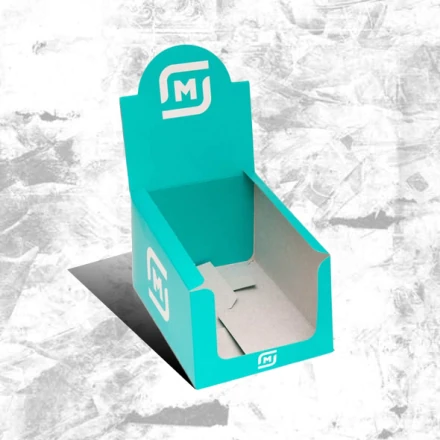
Retailer constraints govern everything here, and they are not negotiable: shelf depth, peg spacing, counter footprint and case pack are set by the store. Ask before you design. Assembly speed matters too, because shop staff build these quickly and a display needing a diagram often just does not get put out.
If you are supplying grocery or pharmacy chains across provinces, confirm whether their planogram specs differ by banner before committing to a die.
Materials, and How They Interact With the Above
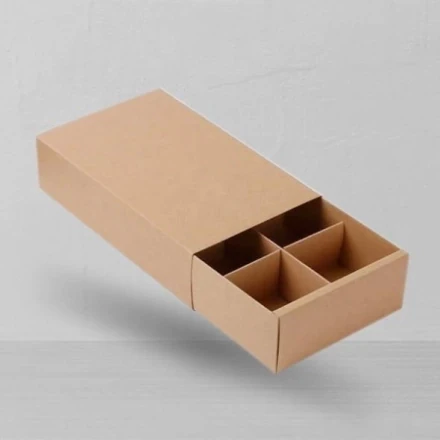
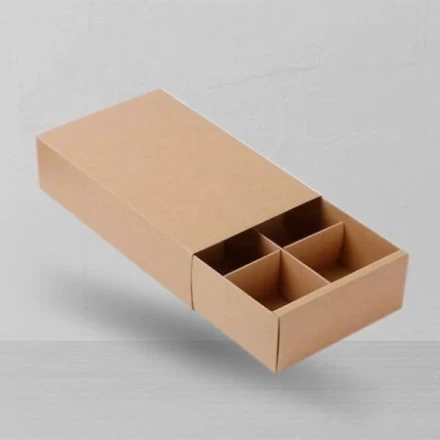
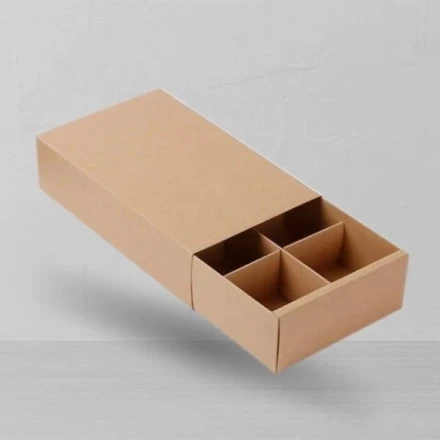
Cardboard and paperboard gives the smoothest surface and the most faithful colour reproduction, which matters when a bilingual panel needs small type to stay legible. Kraft reads natural and understated, but the brown base mutes printed colour and reduces contrast on fine text, so check legibility of your smallest mandatory copy before committing. Corrugated is the choice for anything crossing the country, and worth specifying a grade up for winter long-haul. Rigid board carries the highest perceived value and is used for jewellery, gifting and premium sets; note that it is heavier per unit, which is relevant to both freight and EPR reporting.
Finishing options are covered under Lamination and Finishing. One Canadian-specific note: gloss, matte and soft-touch lamination each change how printed colour reads, so approve your colour after the finish is chosen, not before, and remember that laminated cartons can fall into different recyclability and EPR categories than uncoated ones.
What Ordering Looks Like
Send your dimensions and quantity through the quote form, or a photo of an existing box with a ruler beside it. Pricing comes back within 24 hours. Tell us at that stage if the box is bilingual, if it is going into a regulated category, or if a retailer has given you a spec, because all three can change what we recommend.
Once you proceed, our design team produces a flat dieline and a 3D digital proof at no cost, with revisions included. Physical samples are available on request, and for a bilingual carton we would encourage one, because legibility of small type on your chosen stock is not something a backlit screen shows you accurately.