

| Box Style | As Mention Above |
|---|---|
| Dimension (L + W + H) | All Custom Sizes & Shapes |
| Minimum Run ( For Boxes and Mylar Bags) | 100 Boxes - 1000 Mylar Bags ( 500 each design) |
| Paper Stock | 10pt to 28pt (60lb to 400lb) Eco-Friendly Kraft, E-flute Corrugated, Bux Board, Cardstock |
| Printing | No Printing, CMYK, CMYK + 1 PMS color, CMYK + 2 PMS colors |
| Finishing | Gloss Lamination, Matte Lamination, Gloss AQ, Gloss UV, Matte UV, Spot UV, Embossing, Foiling |
| Included Options | Die Cutting, Gluing, Scored,Perforation |
| Additional Options | Eco-Friendly, Recycled Boxes, Biodegradable |
| Proof | Flat View, 3D Mock-up, Physical Sampling (On request) |
| Turnaround | 7 - 8 Business Days |
| Shipping | FLAT Position |
Choose Your Stock
Every order is printed on your choice of four packaging stocks. Not sure which suits your product? Tell us what you're packing and we'll recommend one.
-
01

-
02

-
03

-
04

Finishing Assortment
Finishes are what make a box feel considered. Combine any of the options below — our team will proof the effect before anything goes to print.
-
01

-
02

-
03

-
04

-
05

-
06

Custom Sushi Boxes for Premium Food Packaging
Sushi is known for its delicate presentation, fresh ingredients, and carefully prepared portions. The right packaging helps restaurants, sushi bars, takeaway businesses, and food brands present their products neatly while supporting convenient handling and delivery. At Custom Boxes Zone Canada, we understand that food packaging should combine practical functionality with an attractive appearance. Our Custom Sushi Boxes are designed around your product dimensions, branding requirements, and preferred packaging style, helping businesses create a consistent presentation for takeaway orders, retail displays, and food delivery.
Whether you serve traditional sushi rolls, nigiri, sashimi assortments, or combination platters, customized packaging gives your business more control over the way your food is presented to customers.
Why Choose Custom Sushi Boxes for Your Business?
Food presentation can influence how customers perceive a meal before they even take their first bite. Neat packaging helps keep sushi organized and creates a professional impression when customers collect takeaway orders or receive food deliveries.
Standard containers may not suit every portion size or brand identity. Custom Sushi Boxes allow businesses to select packaging dimensions, layouts, printing, and structural features according to their needs.
Restaurants can use branded boxes to create a consistent takeaway experience, while supermarkets and food retailers can choose practical designs suited to prepared sushi displays. Custom packaging can also help distinguish different menu items, serving sizes, and promotional combinations.
Custom Sizes for Sushi Rolls, Nigiri, and Platters
Sushi products come in different shapes and portion sizes, so choosing the correct dimensions is essential. A box designed for several maki rolls may not be suitable for delicate nigiri or a mixed sushi platter.
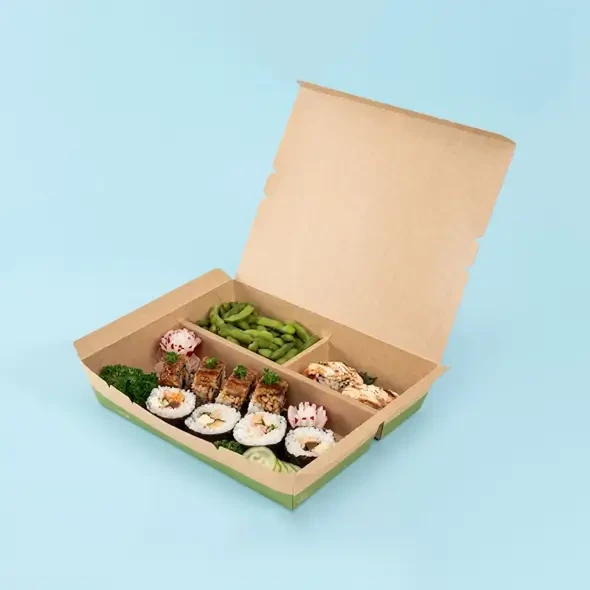
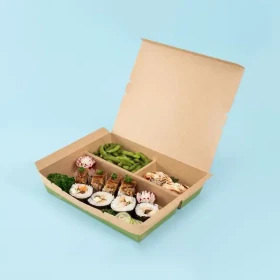
Custom sizing helps businesses create packaging that accommodates their actual menu portions. Depending on the design, boxes may include separate compartments or inserts to help organize different pieces.
Popular applications include:
Sushi Roll Boxes:Suitable for maki rolls and other regularly portioned sushi selections.
Nigiri Packaging: Designed to arrange individual pieces neatly and reduce unnecessary movement.
Sashimi Boxes: Suitable for carefully arranged portions when paired with an appropriate food-contact packaging system.
Combination Sushi Boxes: Useful for mixed selections containing different sushi varieties.
Takeaway Sushi Packaging: Designed for convenient collection, handling, and transport.
Party and Catering Platters: Suitable for larger assortments prepared for gatherings, events, and group orders.
Accurate measurements and suitable internal layouts help improve presentation while reducing wasted packaging space.
Food-Contact Materials and Packaging Safety
Material selection is especially important when packaging prepared food. Businesses should choose packaging materials and coatings suitable for the specific food, temperature, moisture exposure, and intended duration of contact.
Paperboard and kraft-based materials can provide a practical foundation for many sushi packaging designs, provided the complete construction is appropriate for the intended food-contact application.
For chilled sushi, the packaging should be selected according to the product's moisture levels and storage requirements. Any coatings, adhesives, inks, windows, or inserts that may contact food should meet the applicable food-contact requirements.
The outer box alone does not guarantee food safety or freshness. Appropriate food handling, refrigeration, hygienic preparation, and suitable primary packaging remain essential.
Custom Printing for Restaurant Branding
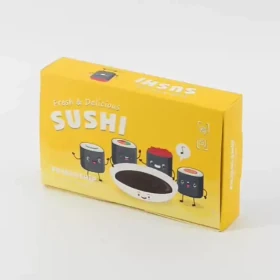
Your packaging is an opportunity to make your restaurant or food brand more recognizable. Custom printing allows businesses to incorporate logos, brand colors, typography, menu information, and other relevant design elements into their sushi boxes.
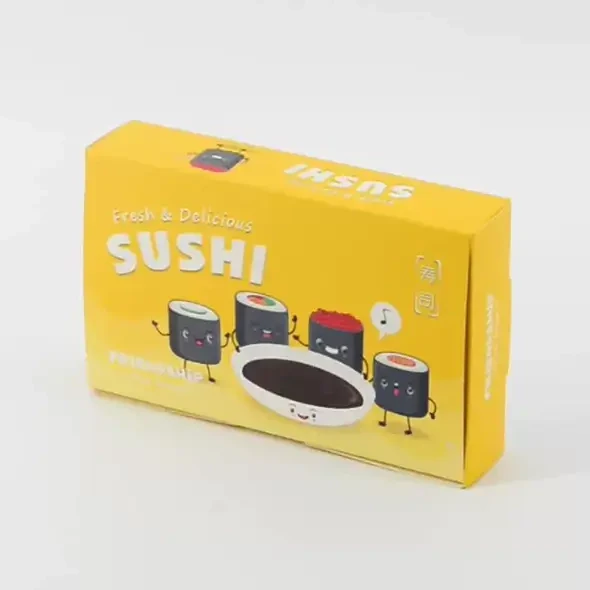
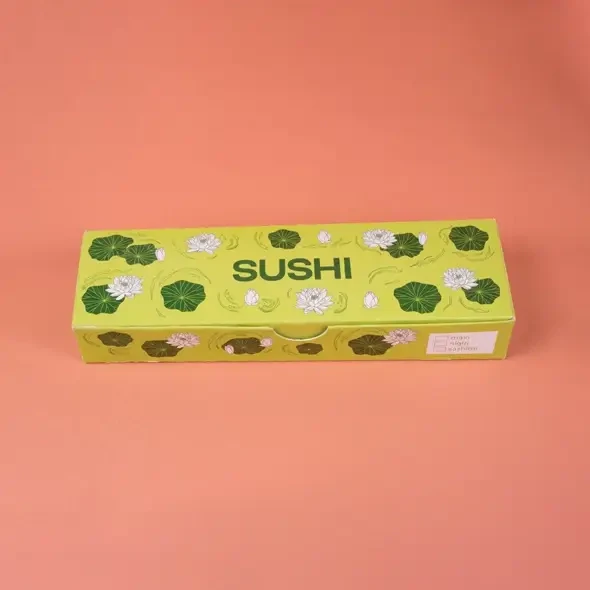
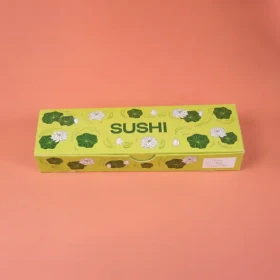
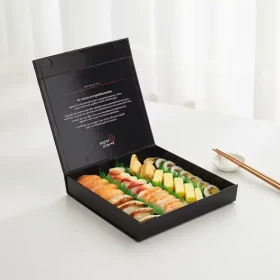
A minimalist design with clean typography can suit a premium sushi restaurant, while colorful illustrations may work well for a casual takeaway business. Japanese-inspired patterns, simple geometric designs, and carefully placed brand graphics can also create a distinctive visual identity.
Businesses may choose full-color artwork or simpler designs depending on their brand guidelines and budget. Clear, well-balanced printing helps keep the packaging attractive without distracting from the food itself.
Practical Box Styles for Different Sushi Orders
The best box style depends on how the sushi will be arranged, handled, and served. Several packaging structures can be considered when developing a custom design.
Tuck-End Boxes: A practical option for selected lightweight food packaging applications where the structure suits the product.
Tray-Style Boxes: Useful for arranging sushi pieces in a defined layout.
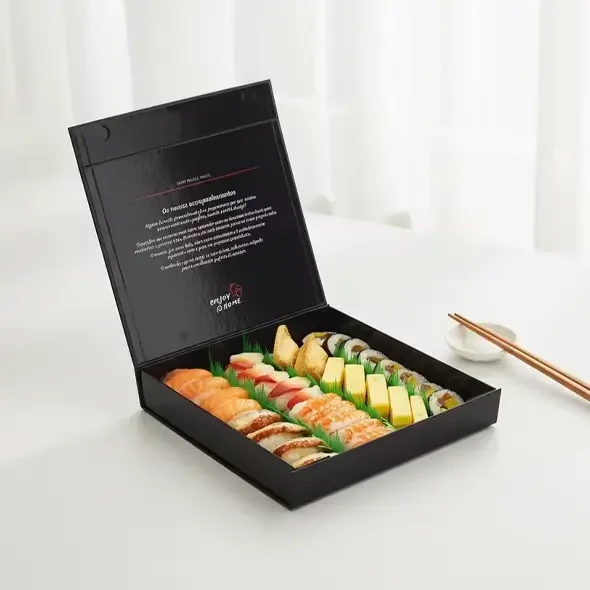
Lid-and-Base Boxes: Suitable for presentation-focused packaging and selected premium assortments.
Compartment Boxes: Help separate different items within the same package, depending on the design.
Window Boxes: Allow customers to view the product when the window material and complete construction are appropriate for the food and storage conditions.
Bento-Style Packaging: Provides a structured arrangement for mixed food selections and accompanying items.
Each format should be evaluated for closure security, ease of opening, food-contact suitability, and the amount of protection required during transport.
Moisture Management and Reliable Construction
Sushi packaging must account for moisture from rice, fish, sauces, and refrigeration conditions. Excess moisture can affect the appearance of the food and weaken unsuitable paper packaging.
The right packaging specification depends on the menu, storage temperature, expected handling, and time between packing and serving. Suitable food-contact barriers, well-designed closures, and properly selected materials may help address these challenges.
If a box includes sauce compartments or separate food sections, its design should minimize unwanted contact between components. Businesses should test packaging with their actual products before ordering large quantities.
For delivery orders, a suitable outer shipping or takeaway arrangement may provide additional support during transportation.
Finishing Options for Attractive Sushi Packaging
A professional finish can help reinforce your brand identity and make packaging more distinctive. Depending on the material and printing method, businesses may consider matte finishes, gloss coatings, selected foil details, or embossed branding.
Matte finishes provide a subtle appearance, while gloss finishes can emphasize colorful graphics. Foil stamping and embossing may be appropriate for premium presentation boxes, although they are not necessary for every food packaging application.
When selecting a finish, prioritize food-contact safety, practical performance, and the conditions in which the packaging will be used. Decorative features should complement the design without compromising the intended use of the box.
Benefits for Restaurants, Takeaway Businesses, and Retailers
Custom Sushi Boxes can support several types of food businesses.
Restaurants and Sushi Bars: Present orders neatly and maintain consistent branding across takeaway packaging.
Food Delivery Businesses: Choose box dimensions and closures suited to the menu and transportation requirements.
Supermarkets and Grocery Stores: Organize prepared sushi portions for suitable chilled displays.
Catering Companies: Package mixed sushi selections for events, meetings, and group orders.
Food Startups: Develop recognizable packaging that supports a new menu or product launch.
For businesses with several menu categories, consistent branding across different box sizes can help create a coordinated appearance.
Custom Sushi Boxes for Wholesale Orders
Businesses with regular packaging needs may benefit from planning orders around expected sales volumes, menu changes, and storage capacity. Before placing a wholesale order, confirm the box dimensions, material specification, printing artwork, available quantities, and production requirements.
Ordering the correct size can help reduce unnecessary space, while reviewing a sample or design proof can help identify layout problems before full production.
It is also useful to consider how the boxes will be stored, assembled, and handled during busy service periods. Packaging that is straightforward to assemble and close can support a more efficient workflow in commercial kitchens.
How to Select the Right Sushi Packaging
Before choosing a custom box, consider these important factors:
Food type: Identify whether the packaging will hold rolls, nigiri, sashimi, or mixed assortments.
Portion dimensions: Measure the product and allow appropriate space for the planned arrangement.
Material suitability: Confirm that the complete packaging system is appropriate for the intended food-contact conditions.
Box structure: Choose a format that supports the product and closes securely.
Branding: Prepare your logo, colors, and artwork for a consistent design.
Storage and delivery: Account for refrigeration, moisture exposure, stacking, and transportation.
Order quantity: Match your order to your business's expected packaging requirements.
Careful planning helps businesses select packaging that fits their operations rather than relying on appearance alone.
Upgrade Your Food Presentation with Custom Sushi Boxes
Professional sushi packaging brings together presentation, practical design, and brand recognition. From everyday takeaway orders to premium sushi assortments, the right box can help keep products organized and provide a consistent experience for customers.
By selecting appropriate materials, accurate dimensions, suitable closures, and well-planned printing, food businesses can develop packaging that reflects their identity and meets their operational needs.
Explore the available packaging solutions at Custom Boxes Zone Canada to plan custom sushi packaging tailored to your menu, branding, and business requirements.