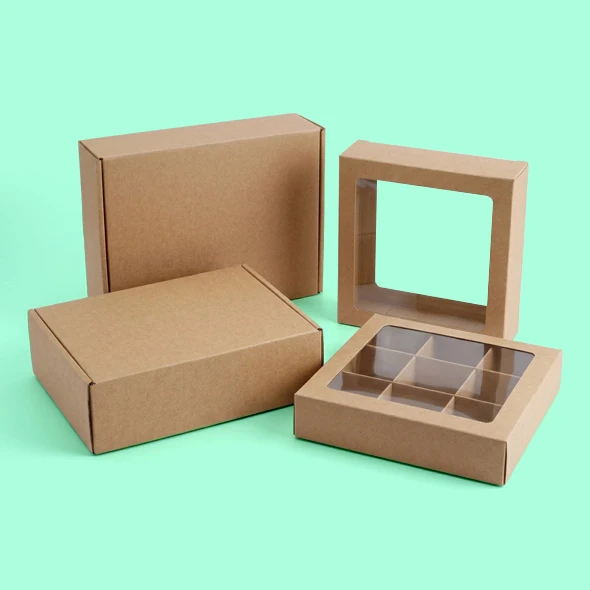
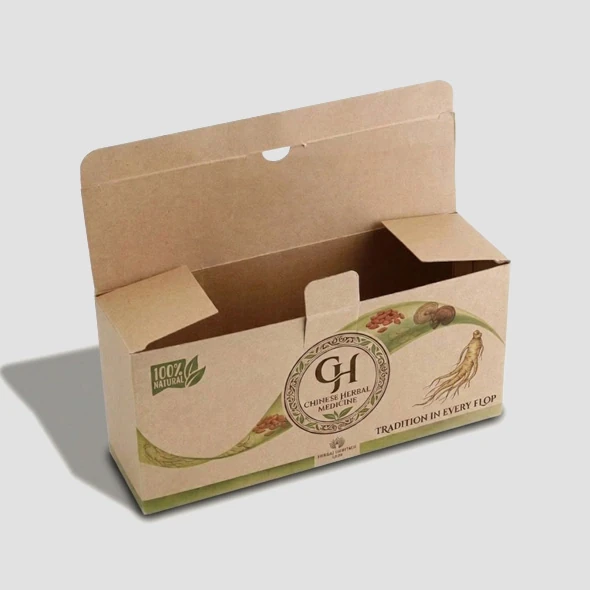
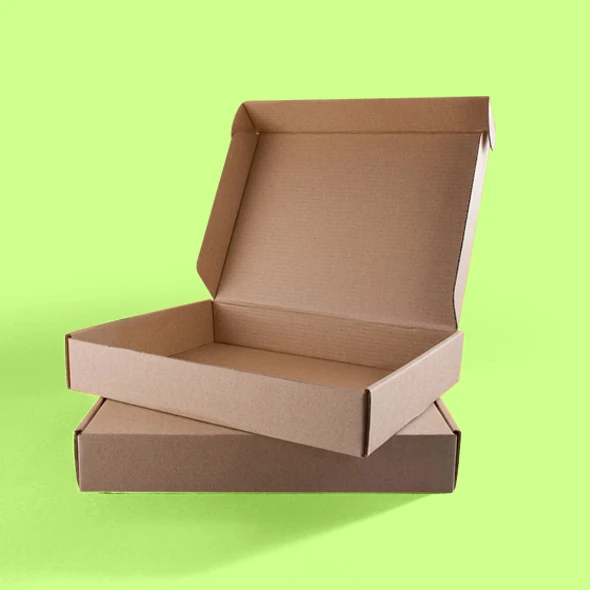
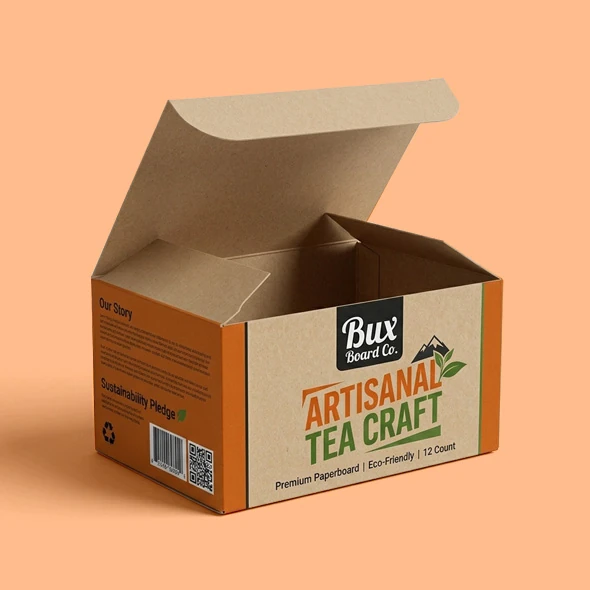
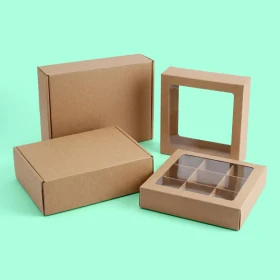
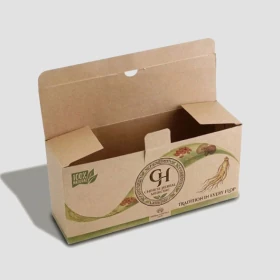
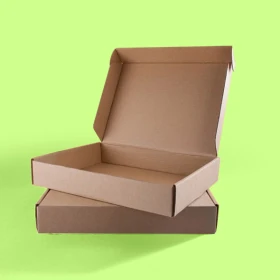
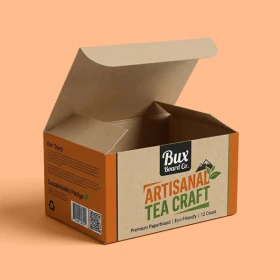


| Box Style | As Mention Above |
|---|---|
| Dimension (L + W + H) | All Custom Sizes & Shapes |
| Minimum Run ( For Boxes and Mylar Bags) | 100 Boxes - 1000 Mylar Bags ( 500 each design) |
| Paper Stock | 10pt to 28pt (60lb to 400lb) Eco-Friendly Kraft, E-flute Corrugated, Bux Board, Cardstock |
| Printing | No Printing, CMYK, CMYK + 1 PMS color, CMYK + 2 PMS colors |
| Finishing | Gloss Lamination, Matte Lamination, Gloss AQ, Gloss UV, Matte UV, Spot UV, Embossing, Foiling |
| Included Options | Die Cutting, Gluing, Scored,Perforation |
| Additional Options | Eco-Friendly, Recycled Boxes, Biodegradable |
| Proof | Flat View, 3D Mock-up, Physical Sampling (On request) |
| Turnaround | 7 - 8 Business Days |
| Shipping | FLAT Position |
Choose Your Stock
Every order is printed on your choice of four packaging stocks. Not sure which suits your product? Tell us what you're packing and we'll recommend one.
-
01

-
02

-
03

-
04

Finishing Assortment
Finishes are what make a box feel considered. Combine any of the options below — our team will proof the effect before anything goes to print.
-
01

-
02

-
03

-
04

-
05

-
06

Bux Board Boxes for Practical, Cost-Effective Product Packaging
Packaging needs to do more than hold a product. It should help protect the contents, simplify handling, support storage, and give customers a clear impression of your brand. Bux board boxes are a practical option for businesses that need paperboard packaging for retail goods, accessories, small components, gifts, and other suitable products. With the right board grade, box dimensions, and construction, they can provide a functional packaging solution without requiring the complexity of heavier packaging materials.
Whether you are sourcing packaging for a growing product line or replacing an existing carton, the key is to select a box that matches your product's size, weight, handling conditions, and presentation requirements.
What Are Bux Board Boxes?
Bux board is a paperboard material commonly associated with economical packaging applications. Depending on the supplier and specification, it may have a grey or brown reverse and a printable or coated outer surface. Its exact thickness, stiffness, surface quality, and recycled-fibre content can vary by grade.
Unlike corrugated board, which contains a fluted layer between liner sheets, standard bux board is generally a solid paperboard material. This distinction matters when choosing packaging: paperboard can suit lightweight products and organized retail packaging, while corrugated cartons are often more appropriate when additional cushioning or stacking strength is required.
The best material depends on the job rather than the product name alone. Before ordering, confirm the actual board grade, thickness, intended use, and any relevant performance requirements with your packaging supplier.
Custom Bux Board Boxes for Different Products
Different products place different demands on packaging. A box designed for lightweight accessories may not be suitable for a dense metal component or an item that travels through a demanding distribution network.
For accessories and small retail goods, a correctly sized carton can keep products organized and make shelf presentation neater. Gift and promotional products may benefit from printed panels, consistent dimensions, and a closure that keeps the contents in place. For small parts, internal dividers or separate compartments may help prevent items from mixing during storage and handling.
For e-commerce orders, consider the complete shipping system rather than the inner box alone. A paperboard carton may work well as the product's primary packaging, but the parcel could require a separate corrugated shipping box, cushioning, or protective inserts.
Choosing packaging according to the actual application helps avoid unnecessary material, oversized cartons, and preventable product movement.
Choose the Right Size and Box Construction
The dimensions of your box affect material use, product fit, storage efficiency, and the overall customer experience. Measure the product at its widest, longest, and tallest points, including any accessories that must fit inside the same package.
Allow appropriate clearance for inserting and removing the product. If the box needs an insert, divider, protective wrap, or instruction leaflet, include those components when establishing the internal dimensions.
It is also important to distinguish internal and external measurements. Board thickness and folding construction affect the finished box's outside dimensions. Confirm which measurement your supplier uses before approving production.
The box style should match how the product will be packed and accessed. Depending on the material and manufacturing capabilities, suitable options may include tuck-end cartons, straight or reverse tuck styles, sleeve packaging, or other folding constructions. Not every style is suitable for every board grade, so confirm feasibility before finalizing artwork.
Printing and Branding Options
Packaging can communicate a brand's identity before a customer handles the product. Custom-printed bux board boxes may support product names, logos, colour schemes, usage instructions, barcodes, and other relevant information, depending on the chosen stock and printing process.
For a clean retail appearance, prioritize readable typography, strong contrast, and a clear visual hierarchy. The product name and essential information should be easy to locate without overcrowding the panels.
Artwork should be prepared to the supplier's dieline, with the required bleed, safe areas, and folding positions accounted for. Keep important text away from cut lines, creases, and glued seams. If colour accuracy is important, request a digital proof and, where appropriate, a physical sample before approving the full order.
Finishes such as gloss or matte coatings, foil details, embossing, or spot effects may be possible on compatible stocks. Availability depends on the board, printing method, quantity, and production setup. Ask for a specification-based quote rather than assuming every finish works with every construction.
Practical Benefits for Businesses
One advantage of paperboard packaging is its versatility across a range of lightweight and moderate-duty applications. A suitable box can help keep products grouped, reduce exposure to routine handling, and create a more consistent presentation across a product range.
Custom dimensions may also help businesses use storage space more efficiently and reduce unnecessary empty space around products. However, the best fit must leave enough room for safe packing and must not compromise closure or structural performance.
For businesses ordering regularly, standardizing box dimensions and artwork can simplify replenishment and inventory management. Ordering larger quantities may lower the unit cost in some cases, but the decision should account for storage space, cash flow, product demand, and the risk of design changes.
Bux board should not automatically be treated as waterproof, crush-proof, or suitable for heavy shipping. Its performance depends on the grade, construction, closures, and conditions in which the package is used.
How to Order the Right Packaging
Before requesting a quotation, prepare a clear specification. Start with the product dimensions and weight, the quantity required, and the intended application. Explain whether the box will be displayed on a shelf, packed inside a shipping carton, stored in a warehouse, or sent directly to customers.
Next, confirm the board grade, thickness, box style, printing requirements, and any inserts or finishes. If the product is fragile, heavy, moisture-sensitive, or subject to special handling requirements, tell the supplier before selecting the material.
Request a digital dieline or design proof to check panel layout, text placement, barcode readability, and fold positions. For a new box design or a product with a close fit, a physical sample is a useful way to verify dimensions, assembly, product access, and closure performance.
Compare quotations using the same specifications. Check whether prices include printing, tooling or setup, finishing, sampling, packing, freight, taxes, and any minimum order quantity. Confirm production and delivery estimates separately, because manufacturing time and shipping time are not necessarily the same.
Find a Suitable Bux Board Packaging Solution
The right packaging balances product fit, material performance, appearance, and total cost. Bux board boxes can be a sensible choice when the application calls for paperboard packaging and the selected grade meets the product's handling requirements.
Share your product dimensions, quantity, artwork, and intended use to help determine a suitable box construction. A clear specification makes it easier to assess material options, identify potential limitations, and receive a quotation based on your actual packaging needs.